why safety starts at the door
Doors are one of the most critical safety interfaces on a vehicle. They connect the bus to the city, the passenger to the vehicle, and the operator to the public space. Every boarding and alighting movement passes through this single point.
That means door systems directly influence accessibility, passenger flow, reliability and — most importantly — safety.

functional Safety: automotive-grade engineering
Ventura door systems are designed as safety-critical systems, following the international ISO 26262 functional safety standard. This ensures that system failures never result in unacceptable risk for passengers, drivers or operators.
We apply a full safety lifecycle:
- potential hazards are identified and analysed,
- each function receives an ASIL safety level,
- safety goals are defined,
- and systems are designed, tested and validated accordingly.
From concept to production, Ventura door systems follow the V-model for safety verification and validation — ensuring that what is designed is also what is delivered on the vehicle.m. bv ,mmz
the safety triangle
Ventura approaches door safety through three integrated layers. Only when all three layers work together can a door system truly be safe.
passenger protection
Passenger protection is the physical and electronic layer that ensures doors react safely in every situation.
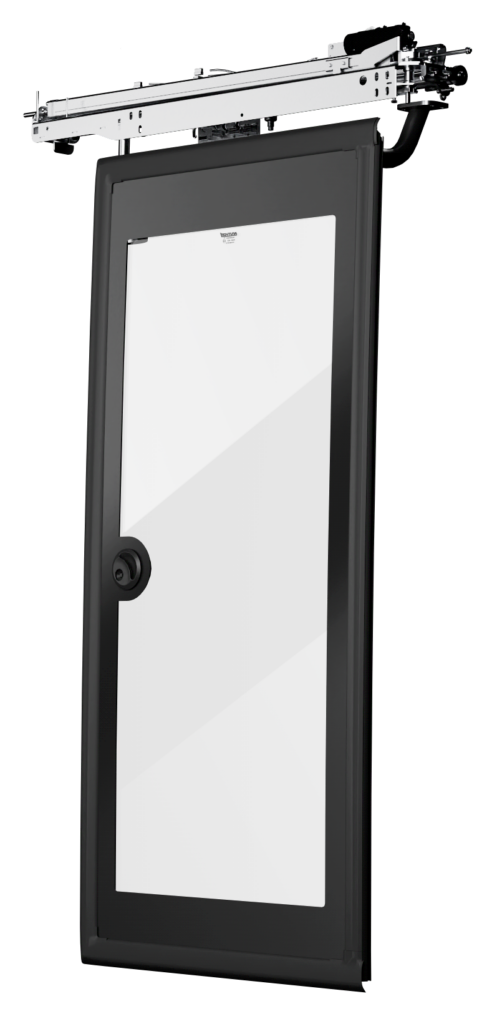
At the heart of the system is the Door Control Unit, which continuously monitors motor behaviour, forces and movements. It detects obstructions, drag, excessive current, incorrect speeds and time-outs, and immediately intervenes when something is wrong.
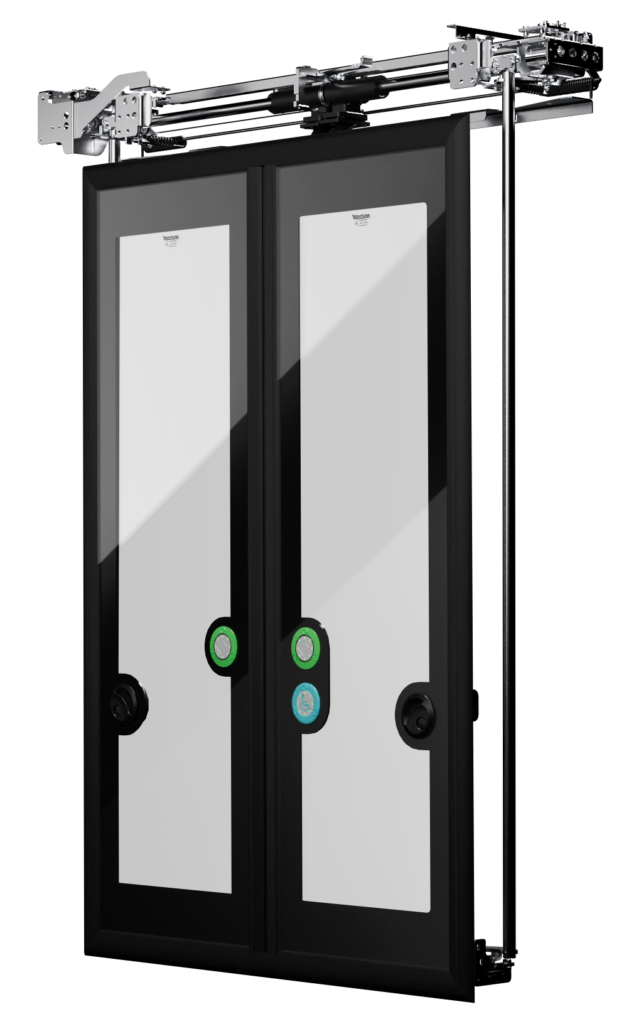
The sensitive edge adds a direct physical safety layer: when pressure is detected during closing, the door reverses automatically.
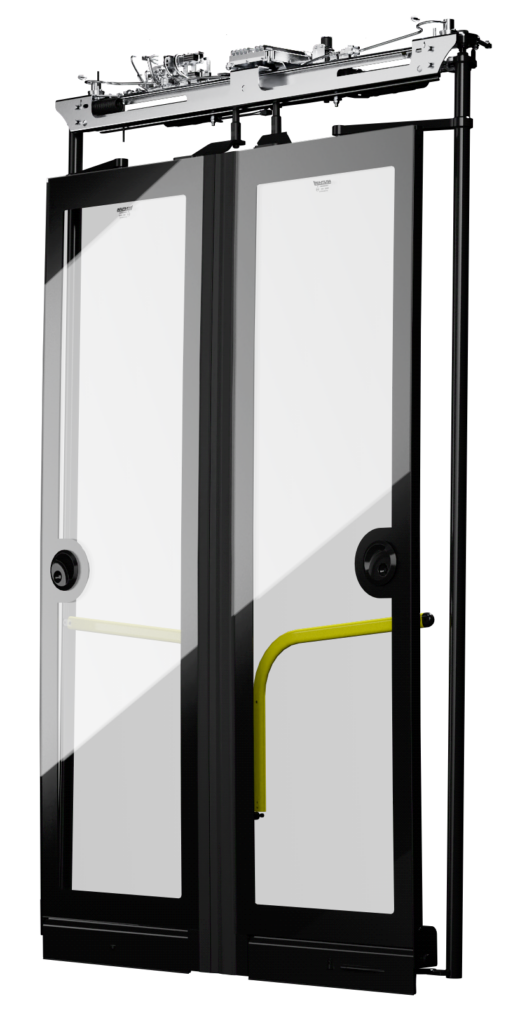
In emergency situations, the emergency system allows passengers and drivers to immediately stop or override the door, ensuring safe evacuation and access at all times.

passenger detection
Detection systems make sure the door knows who or what is in its opening.
Ventura uses multiple sensor technologies to cover different situations:
infrared beams detect movement across the doorway, optical sensors monitor vertical zones, and light barriers create invisible safety curtains. Capacitive edges add another layer of physical presence detection.
Together, these systems prevent doors from closing on people, wheelchairs, bags or clothing — even in crowded or complex boarding situations.

passenger interaction
Safety is not only about sensors — it is also about communication.
Ventura doors actively inform passengers through light signals, LED buttons, audible warnings and voice announcements. Clear visual striping on door leaves shows where to stand and how the door will move.
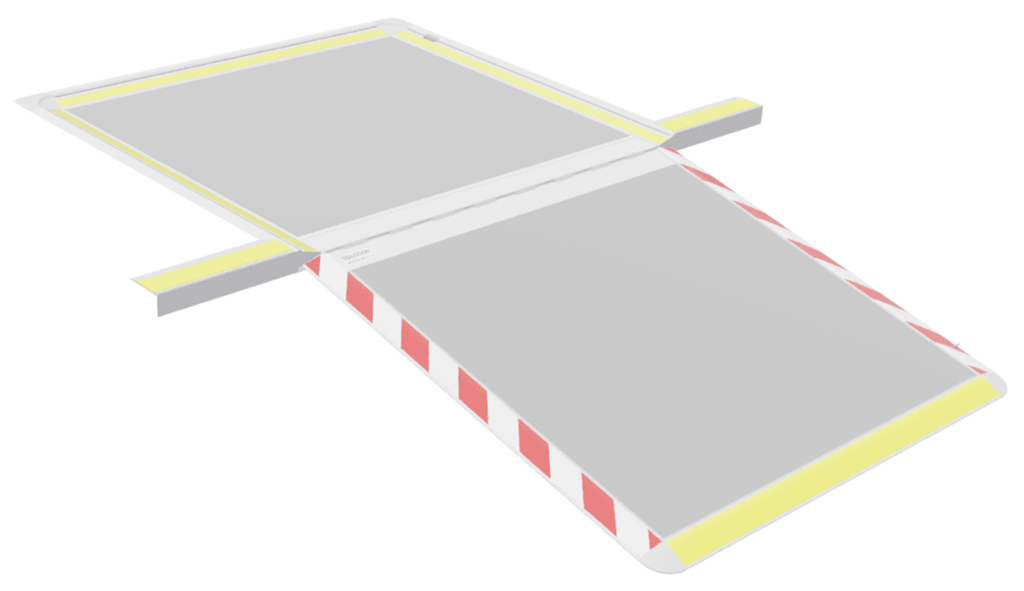
For accessibility, tactile buttons and Braille markings ensure that visually impaired passengers can interact safely and independently with the door system.